Magically Eccentric
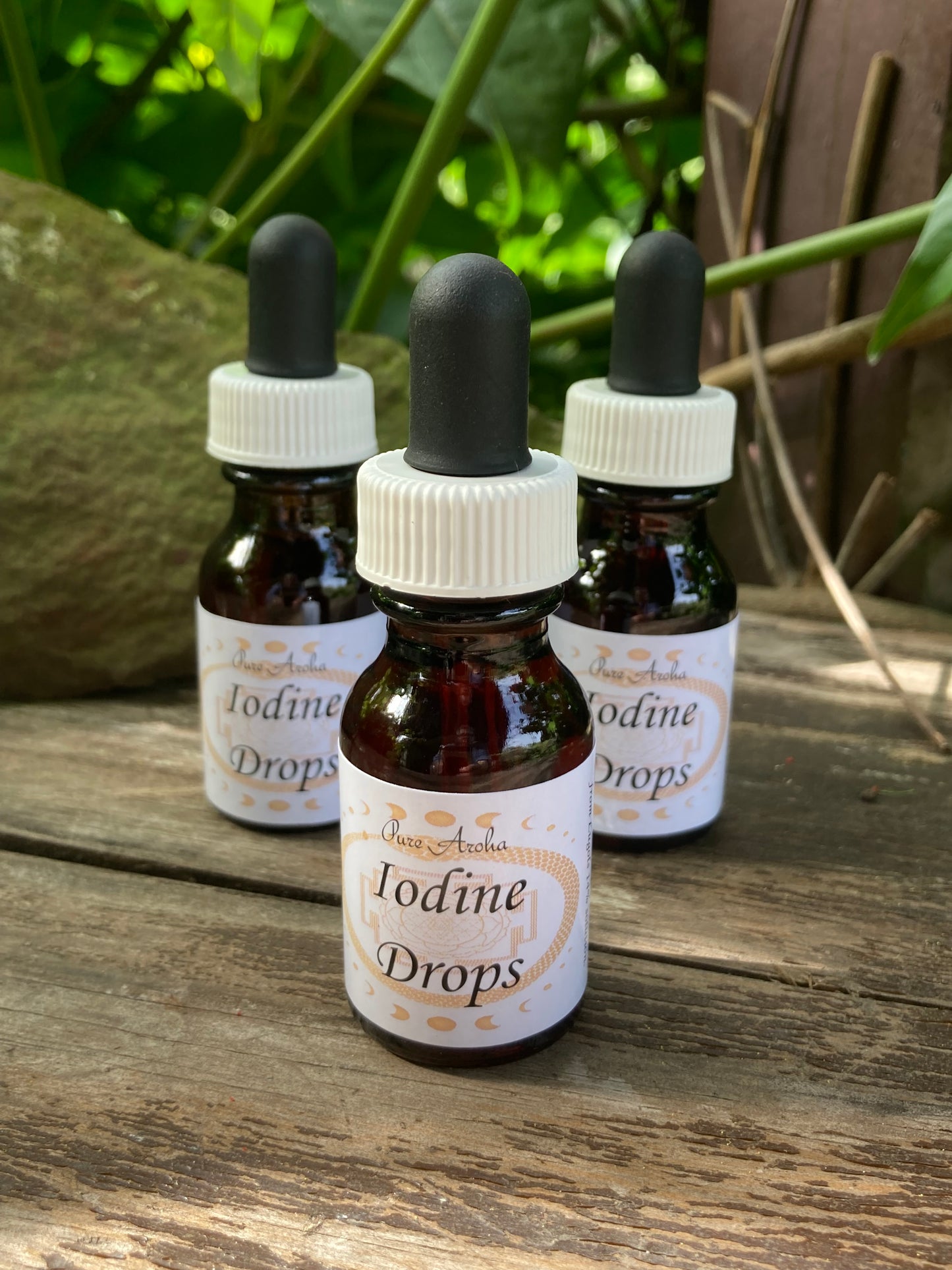
Iodine Drops
Iodine Drops
Couldn't load pickup availability
Iodine Drops✨Iodine✨15mls✨
This is the proper dilution for every day use. Diluted from Lugol’s 12% Solution.
2 drops everyday, under tongue
Iodine is an essential trace mineral required to make thyroid hormones, which control your metabolism, body temperature, and heart rate. It prevents conditions like goiter and hypothyroidism, and it plays a critical role in early brain and nervous system development during pregnancy and infancy.
Symptoms Of Iodine Deficiency
If your iodine levels are not optimal, you may experience a variety of unwarranted symptoms. Some symptoms of iodine deficiency and thyroid dysfunction may include:
- Low mood
- Feeling increasingly tired and craving naps
- Irregular menstrual cycles
- Headaches
- Cold intolerance
- Thinning hair
- Shortness of breath more easily
- Brain fog
- Constipation joints
- Stiff joints and muscle soreness
How Iodine Levels Affect Thyroid Health
The thyroid is a butterfly-shaped gland surrounding the windpipe in the neck region. Its role is to produce thyroid hormones. Two major types of thyroid hormones are secreted from the thyroid gland, levothyroxine (T4 ) and L-triiodothyronine (T3). T4 and T3 affect the function of virtually every organ system.
T4 is an inactive form of thyroid and is secreted solely from the thyroid gland. Outside of the thyroid gland, T4 is converted to T3, also known as the active form of thyroid. They both contain iodine; the "3" and the "4" refer to the number of iodine molecules in each thyroid hormone molecule. Active thyroid hormone helps us optimize energy (control metabolism) by stimulating our cells to utilize vitamins, proteins, carbohydrates, fats, water, and electrolytes.
Because iodine is mandatory for thyroid hormone production, iodine deficiency leads to lower thyroid function. With a persistent lack of iodine to produce adequate thyroid hormones, the body is at a higher risk of developing autoimmune thyroid disease.
Who Is at Risk for Iodine Deficiency?
Iodine deficiency is not common, but iodine insufficiency is becoming more prevalent. Those who choose healthier sea salt over table salt are at higher risk for low iodine because table salt is iodized (iodine is added to all table salt).
Other risk factors include:
- Eating a raw food diet high in cruciferous veggies like broccoli
- Drinking chlorinated water or highly fluorinated water
- Exposure to bromides and bromines
- Eating mostly processed food
- Having a family history of thyroid disease
Cruciferous Veggies
Cruciferous veggies include sulfur-containing vegetables and are often recognized by their distinct odor during the cooking process such as cabbage, cauliflower, and brussels sprouts. They are a group of vegetables considered power food because they are full of wonderful nutrients such as B vitamins, fiber, and antioxidants. One drawback is that during the digestive process, they yield a compound known as goitrin, which may interfere with thyroid hormone synthesis. This is only a concern if large amounts of raw cruciferous vegetables are consumed on a regular basis.
Drinking-Water
Both chlorine and fluoride directly interfere with iodine uptake. Chlorine and fluoride are usually found in tap water and some bottled water. A basic carbon water pitcher filter does not remove these elements; however, a reverse osmosis filter will remove these chemicals. Fluoride is often found in toothpaste and does help lower cavity formation. If you use fluoridated toothpaste, make sure to rinse your mouth before swallowing.
Bromides
Bromines and bromides are chemicals found in a wide variety of household products. Bromides are present in some flame retardants used on couches and car seats, carpets, mattresses, and upholstery. Exposure to bromines may occur in OTC medications, foods, and personal products like hair dyes. Be sure to check the label of your household products for these as they are known to disrupt the endocrine system of the body that is responsible for the production of our hormones.
Iodine-Rich Foods
Iodine is not usually plentiful in our diet. Only a few select foods have a high enough iodine level to make a positive impact on health. Food sources of iodine include: